-
 By
-
By
-
-
 21 Sep, 2026
7 Signs Your Business Needs An Effective HRMS Solution
Key Takeaways
- As the employee count increases, manual HR activities become challenging.
- The hiring tool makes it easier to record tasks and track employees’ activities, attendance, documentation, performance, assets, and more.
- Online HR tools work for office, remote, and hybrid teams via web apps, desktop software, and mobile apps.
- The integrated system for monitoring attendance, scheduling shifts, managing leave, and tracking time helps HR teams manage payroll and other resources more effectively and be better organised.
- Modern HRMS systems enable HR to assist employees throughout their time with the company, including recruitment and exit.
Nowadays, as businesses expand, managing the human resources workflow, worksheets, emails, and non integrated HR tools can become a challenge. Tracking attendance, handling time-off requests, monitoring employee performance, managing payroll data, and hiring employees are among the most important HR processes. Even, managing employees’ details manually is tedious process, reducing the work efficiency of HR professional.
If there is no unified solution beyond HR, they will spend more time on these tasks rather than focusing on employee training, business development, and advancement. A proper HRMS system can be the only solution to this problem. Modern cloud-based HR systems can help track attendance, documentation, assets, payroll, hiring, onboarding and employee exit on one connected platform.
Surely, this post will help you understand why your business needs an HRMS solution and how it can manage HR workflows more efficiently, providing greater visibility across the employee lifecycle.
Let’s dive deep into this:
1. What is an HRMS solution?
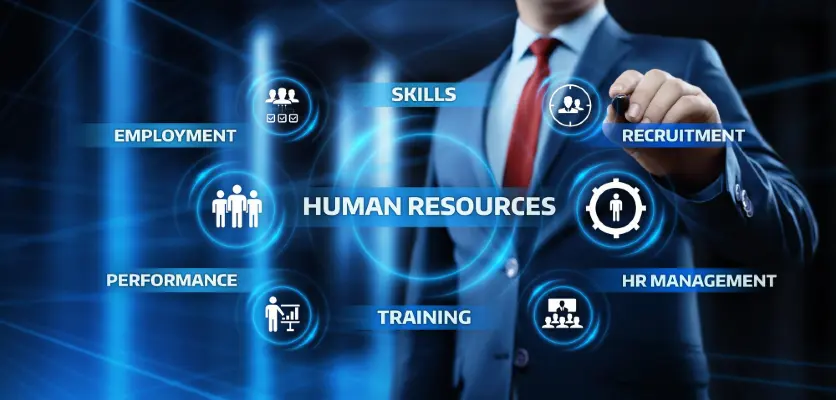
HRMS (Human Resource Management System) is software that enables organisations to manage all employee related processes through a centralised digital platform, rather than maintaining separate documents or files for employee data, leave, attendance, personal records, and performance.
This software includes employee management, employee self-service, attendance, leaves, shifts, performance and growth, KRA/KPI management, PIP, documents, assets, HR communication and engagement, HR reporting, payroll and exit management.
Also, it offers recruitment management system that integrates the entire employee hiring and management process.
Here are the top 7 points to let you know why your business needs an effective HRMS solution:
2. Your HR Department Still Relies on Manual Processes
If the human resources team spends a lot of time managing documents like worksheets and employee personnel files and waits to create reports, it’s high time to integrate a human resources management system.
Human resource workflows sometimes get fragmented due to different files, documents or databases. To ensure smooth handling of all tasks, it is important to have good HRMS software; it also gives HR greater comfort in day-to-day work management.
3. When Tracking Attendance & Shifts Become Challenging
Technical complexity increases with the increased number of employees working differently, some of them working from home while some of them work from the office at different shifts, fields or locations. Forgotten punches, late arrivals, return-to-work requests, leave requests, and shift changes add even more administrative burden.
A cloud based HR software gives you an effective way to manage all these busy tasks. HR professionals can easily track attendance through web, mobile, GPS, geo fencing and geo tagging for precise employee monitoring. The best part is that you can easily access daily as well as monthly attendance of distributed employees on a single dashboard.
Attendance data even helps you plan regular, rotational and night shifts to build smarter schedules across locations. This will reduce burnouts and boost employee’s productivity.
4. Scattered Employee and Asset Records
Employees’ records do not always include names and titles, but they also contain employee details, contracts, HR correspondence, and the assigned assets. When documents are stored in various places, such as different folders or paper files, retrieving the information is time consuming and annoying.
This is why it is crucial to implement an effective HR management system that provides a better-organised digital space for managing employee documents. HR professionals can organise employment data, history and organisational details on one integrated platform, saving time and energy. You don’t need to chase new employees for documents. Even employees can update their personal details and access HR services via ESS portal.
You can even integrate HRMS software to organise and track company assets. From allocation to return processes, manage your assets with complete history and vendor information.
5. Inconsistent Performance Evaluation of Employees
It is not enough for a company to keep records of employee attendance and administrative documents for every individual employee. There must be a method to let them know how to track their performance or achievements, identify which work needs improvement, and follow up on task completion.
When performance reviews are irregular and managers cannot verify whether employees have completed the targeted tasks, HRMS software will help structure the process effectively.
This will help with performance and growth management in any organisation, alongside systems such as KPIs, KRAs, and KGIs, as well as performance reviews and employee feedback.
6. Payroll needs data from various sources
To process payroll efficiently, there must be accurate information about employees, their working hours, and other factors, such as their leave and breaks, as well as accurate payroll calculations. In HR departments, this information is usually handled manually, a process that is time consuming and error prone.
Replacing these processes with effective HRMS software can integrate employee time tracking, attendance, and approved timesheets into payroll. Since the system will automatically fetch the exact time you punch in or out, your leaves or late entries will be recorded automatically.
For businesses looking to replace manual processes with a cloud-based HR solution, this will be the best Software for your business.
7. Having remote, hybrid, or multi-location employees
Managing employees who work from different locations creates a real mess; having team members on different premises adds another layer of complexity. The HR department has to maintain records of attendance, shift timings, locations, leave management, and employee communications.
Cloud based technology enables the HR department to get the information they need without leaving their premises. This software bought solution to this hectic problem of managing the workflow of employees working from different locations and premises. It offers the capability to access information via the web, desktop, and mobile devices.
Using fully integrated HR systems is a new trend that aligns with the ease of doing business, enabling HR to operate smoothly.
8. Recruitment, onboarding and employee exit are disconnected
The need for an integrated HR system depends entirely on the onboarding and management of employees and on the status of their exits, which are handled individually. From recruiting to onboarding, managing attendance, performance, training, and the final exit, all components of the employee lifecycle must be managed by separate tools.
The software integrates recruitment with HR management by encompassing various aspects of recruitment, interviews, screening, offers, and employee onboarding to streamline the hiring process and build a stronger team.
9. What aspects should be considered in a Quality HRMS?
In selecting an HRMS application, the company should determine whether the solution will meet its current HR needs and support its future HR development.
Some of the key features that should be in place are:
- Attendance tracking
- A digital employee database
- Workforce planning
- Geolocation, geo-tagging, and geo-fence
- Leave and holiday management
- Reports & Analytics
- Performance and growth tracking
- Payroll management
- Documents and assets
- HR communication
- KRA/KPA/KPI management
- Employee exit management
- Probation and promotion process
- Mobile HRMS
- Role-based permissions and configurable HR policies
These are some of the capabilities this software can provide to facilitate HR department management.
Wrapping Up
The necessity of having an effective HRMS usually becomes apparent when there is a lot of employee intensive work for the HR department, when it is difficult to manage employee information, or when the organisation grows and operates from various locations.
An HRMS solution enables effective management of employees, attendance, performance, payroll, and exits. For many modern companies, cloud-based HR systems are solving the challenge of working and managing the HR workflows and employees, whether in-office or remotely. The HRMS software integrates several HR functions, including recruitment, project management, task management, productivity management, chats, meetings, and training, into a single workforce management platform.
Frequently Asked Questions
1. What is an HRMS Solution?
An HRMS solution is software that helps organise and manage HR processes, such as employee records, attendance, leave, shifts, documents, recruitment, payroll, and employee exits, from a centralised platform.
2. What is a cloud based HR solution?
A cloud based HR solution is a platform, hosted on the internet that enables authorised users to access information and perform functions through connected devices.
3. When should a business consider investing in an HRMS?
A business should go for an HRMS solution when it is performing everything manually in the HR department, dealing with employee records is more complicated than expected, marking attendance and leaves is a tough job, gathering all of the payroll information requires extra effort and time, and the company is using different technology for recruitment and employment management.
4. Can HRMS handle attendance, shifts, and leaves?
Yes. A modern HRMS solution can easily handle attendance, regularisation, shifts, leave, and related activities. The business can facilitate attendance management by providing GPS, Geo-tagging, and geo-fencing functions for users.
5. Can HRMS track and manage the entire employee lifecycle?
Yes. An integrated HRMS can manage many aspects of the employee lifecycle, such as recruitment, onboarding, employee record-keeping, attendance, leave management, performance management, training, payroll, documentation, and exit management.