-
 By
-
By
-
-
 03 Aug, 2026
What Is Workforce Intelligence And Why Does It Matter In 2026?
Key Takeaways
- Workforce intelligence has become the need of the hour for modern businesses. The platform goes beyond time tracking by turning real time employee data into staffing, task management and performance decisions.
- Understanding the difference between team management and workforce intelligence helps make data driven and forward looking process for your team and organisation.
- Workforce intelligence helps businesses by predicting workforce trends, providing real-time team visibility for flexible teams, boosting workforce utilisation, and improving overall employee productivity.
- The core components of AI powered workforce management software are time and activity data, App and URL usage data, and screenshots and context data.
- AI is transforming workforce intelligence from description to predictive. Around 80 per cent of HR professionals report AI has elevated their efficiency, helping teams to act on patterns before deadlines.
Workforce intelligence is AI powered software that analyses employee data, real time performance, skills, productivity and workforce trends to deliver accurate insights for seamless management and smarter business decisions.
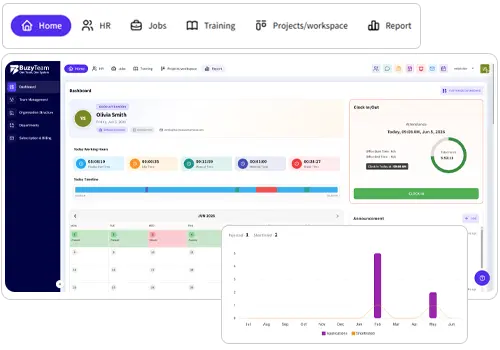
With the evolution of new age technologies, businesses have been leveraging advanced tools like time management software to keep their team organised, productive and motivated. When time tracking is combined with project management and activity metrics, it becomes easy for managers to track clock in, clock out, real time activity, and project progress from a highly intuitive dashboard.
However, artificial intelligence is reshaping the way organisations use team operating tools. Now, features like AI-assisted reporting, fact driven employee data, real time dashboards and much more. These features and functionalities are known as workforce intelligence. From automating repetitive tasks to critical assessment of workflow processes, it does all with perfection. India’s AI competitiveness has almost doubled from 12.9 to 21.9 between 2018-2024, securing third place globally behind USA and China.
Many businesses are already using artificial intelligence to streamline their smart workflows and day-to-day operations. Integrating AI tools in employee management system can be game changing decision for businesses.
In this guide, you’ll discover everything about workforce intelligence and its importance in 2026. Smarter teams need smarter solutions for quality outcomes!
Let’s Get Started!
1. What Does Workforce Intelligence Mean?
Workforce intelligence is a new-age practice that aims at optimising workforce/team performance, workload, resources management and overall productivity to help businesses make data driven decisions quickly.
From collection and analysis to complete interpretation of employee data, AI workforce management software helps companies gain valuable insights for operational efficiency, maximum productivity and employee satisfaction.
Most teams already track productivity through real time tracking software, activity levels, browsing patterns, screenshots and project progress. Workforce intelligence gives these teams a new lens to make data driven and efficient decisions for higher growth and quality outcomes.
2. Team Management vs. Workforce Intelligence: What’s the Difference
Team management is about tracking working hours of employees, scheduling shifts, logging attendance, tracking project progress, managing payroll and ensuring compliance. Highly intuitive An Employee Management System helps you gain insights into your team’s performance.
Workforce intelligence, on the other hand, helps you gain insights into your employees’ data. AI empowers you to understand patterns in how your team operates, predict potential risks and identify the gap between how work is designed vs how it is being completed. It is data driven and forward looking procedure that helps you make strategic decisions for your team and organisation.
Most businesses have invested in workforce management, but very few integrate AI powered team management system that makes a world of difference in determining their growth in the cutthroat market.
For instance:
Team management and analytics tool helps manager develop next week’s roster and overview the pattern to optimise resources efficiently. If there is any shortage, workforce intelligence automatically rebalances the shifts on a particular day to manage overtime/overburden spikes.
3. What Is the Importance of Workforce Intelligence in 2026
Modern businesses need AI powered workforce management software. Let’s unveil key benefits:
- AI Predicts Workforce Trends: It can be challenging to sort through weeks of tracking logs and screenshots manually for productivity metrics. Luckily, an AI-assisted reporting tool not only streamlines and accelerates the process but also converts the volume into actionable information. It helps predict workforce trends based on data and offers solutions.
- Provides Real Time Team Visibility: Unlike traditional spreadsheets that require manual updates, workforce intelligence smartly analyse data for hybrid and remote teams and their locations. Managers can easily monitor productivity, spot trends, and address challenges efficiently with real time data.
- Businesses Need Data for Budgeting, not Surveillance: Most companies track their employees’ working hours, activities and attendance because it helps them identify potential discrepancies. However, it is good to track your workforce capacity to meet long-term business goals.
- Boosts Workforce Utilisation: By analysing workforce capacity, performance and skills, AI workforce management software helps businesses allocate resources efficiently. It becomes easy to forecast staffing requirements and optimise team performance to minimise operational inefficiencies.
- Elevates Employee Productivity: Artificial intelligence used in team management software detects workflow bottlenecks, time-consuming tasks, and collaboration patterns across teams and departments. This enables companies to boost employee engagement and create a productive and positive work environment.
4. What are the Core Components of AI Workforce Management System?
A fully functional, AI powered system breaks down into three layers for deep assessment:
- Workforce intelligence provides time and activity data inputs for benchmarking to help make the right staffing decisions.
- AI uses App and URL usage data to conduct trend analysis and predict future workload balancing.
- Screenshots and context data are used to detect anomalies to make compliance reporting easier.
Workforce management and time tracking tools transform workflow help generate data, while AI integration allows you to do critical thinking and decision making efficiently.
5. Implementing Workforce Intelligence Tools in Your Organisation
There is no denying that it is one of the most valuable tools enabling businesses with critical insights into their team. This helps them make informed decisions without any delays. By analyzing data of in office and remote teams, activity patterns, active vs inactive hours, resources utilization, attendance logs, performance and skills, you can easily identify areas for improvement.
It helps you clearly define your targeted goals with the use of AI powered employee management system. Ensure you stay on top of employee performance metrics, training records and location information for transparency.
Note: Managing sensitive employee data can pose a serious cybersecurity threat. Ensure the software you choose follows strict adherence to data privacy and security regulations.
Wrapping Up
New age businesses are leveraging the benefits of predictive analytics and AI data driven tools in workforce planning. That’s where workforce intelligence comes in. With the help of employee data, AI tools can predict trends, workload shifts, performance metrics and growth to help make informed decisions at the right time.
Frequently Asked Questions
1. What is the difference between workforce intelligence and workforce analytics?
Workforce analytics converts raw data of employees into trends and benchmarks, while workforce intelligence turns those trends into informed decisions about staffing, performance, and workload.
2. How does workforce intelligence help my business grow?
It helps your business make smarter, data-driven decisions by providing accurate insights into employee productivity, workload, attendance, and performance. It can spot operational inefficiencies, boost resource allocation and support better workforce planning, helping managers address issues promptly.
3. Is workforce intelligence ideal for hybrid and remote teams?
Yes. The AI powered team management software is designed to track active vs idle hours, collaborations, progress, attendance and resource utilisation across remote and hybrid teams.
4. What data does workforce intelligence use?
It uses time and activity data, project data and app and URL usage to generate real time data of employees for benchmarking, predicting trends and supporting decision making.
5. How is artificial intelligence changing workforce management?
AI is enhancing workforce management software, enabling it to transform from descriptive to predictive. Instead of creating a report, systems can flag patterns early to let managers prevent issues from ever increasing into significant ones.