How AI Is Transforming Workforce Planning In 2026
In 2026, artificial intelligence has evolved beyond an emerging technology for businesses. It redefines how organisations work, aligning people and streamlining workflows to stay organised, agile, and productive. Embedded into daily business operations across functions, it has become easier to make well informed decisions faster, without downtime.
The good news is that AI is rapidly transforming workforce planning across industries. It allows businesses to predict future talent requirements, automate repetitive HR processes, align remote teams and make strategic decisions based on accurate data and insights.
The technology takes one step forward to boost operational efficiency while streamlining workforce management. There is no denying that AI will change work, but how businesses are prepared to adapt to that change responsibly matters the most. In this guide, we will understand how AI (Artificial Intelligence) is reshaping workforce planning worldwide. Organisations using Workforce Management & Productivity Software to manage remote teams can leverage AI to automate scheduling, reporting, communication and workforce analytics.
Let’s Get Started!
1. AI Enables Data Based Workforce Decisions
Conventional workforce planning often relies on assumptions and past trends. However, AI enables organisations to make data driven workforce decisions to support sustained business growth and long term goals. The technology uses machine learning to predict skill shortages, optimise staffing levels and identify roles at risk to manage both in office and remote teams.
Artificial Intelligence can help predict when and where you’ll need human resources by analysing complex data points, such as attendance, production forecasts, turnover, and other trends. This makes workforce planning a proactive approach, based completely on analytical insights.
AI driven HR operations can better anticipate talent shortages and align the best people with business goals. In competitive labour markets, accurate foresight is critical. For instance, predictive analytics can help you anticipate an upcoming shortage, allowing businesses to assign work to the right people at the right time. This gives managers time to manage the workforce before it affects operations.
2. Proactively Detects Declining Work Patterns
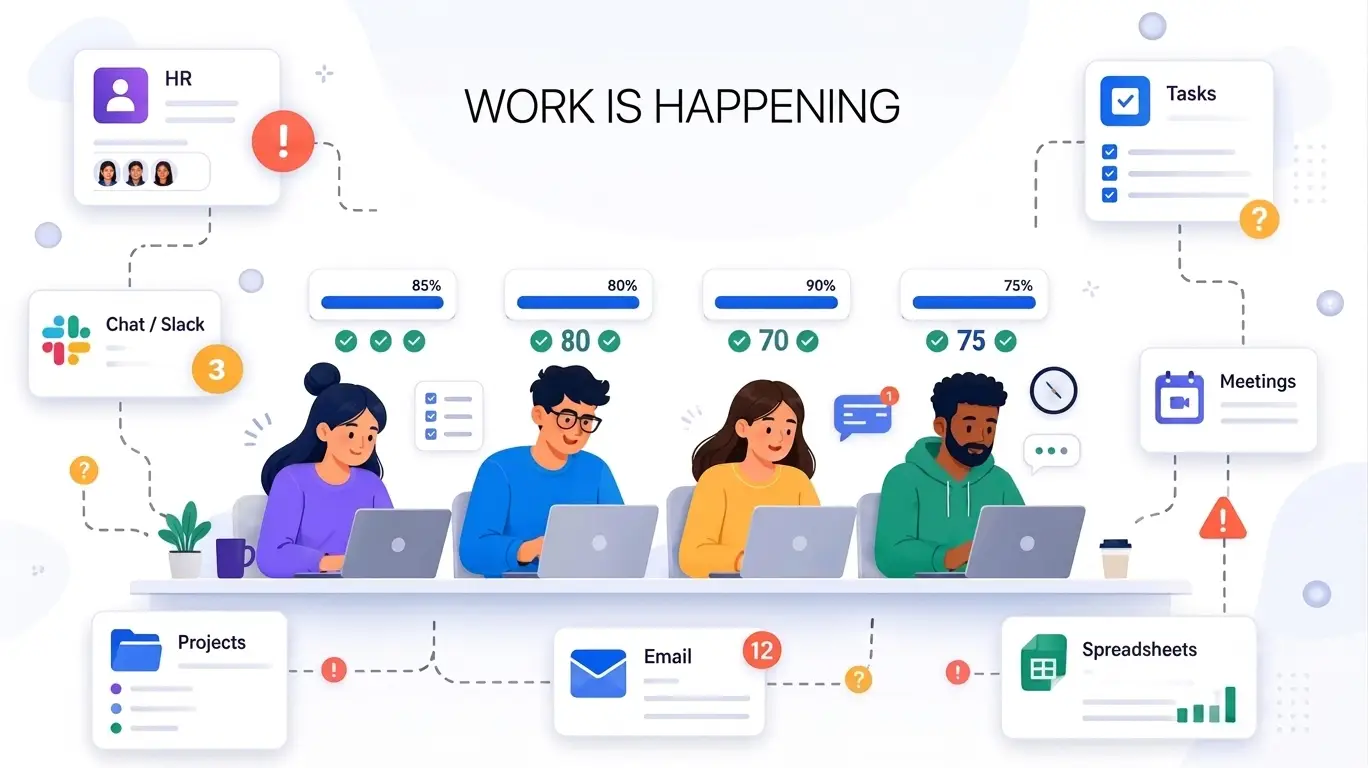
If you want to manage your remote teams worldwide, use Workforce Management & Productivity Software to streamline workflows. It brings transparency to operational efficiency by tracking real time active vs. idle hours, employees’ productivity, performance trends, and project delivery times. By incorporating AI technology, companies can easily identify declining work patterns within the system. Workforce planning transforms in the following ways:
- Dynamic Capacity Prediction: AI quickly interprets trends in remote and hybrid work models, flexible and global scheduling, and labour availability. Then it forecasts how these trends will affect staffing needs and peak working hours.
- Shift Optimisation: Fetching data from Workforce Management and Productivity Software, AI can easily align shift patterns with employee preference trends without any stress.
3. AI is Redefining Workforce Roles
Workforce planning has become more agile, predictive and streamlined with the integration of Artificial intelligence. Whether you have a fully fledged in office team or people working remotely, the technology helps you look beyond job titles to better understand the work.
Businesses can see which tasks can be automated, which require human intervention, and how work can be structured to achieve higher productivity without downtime or discrepancies.
Integrating AI into workforce planning in 2026 can also improve the precision of HR decisions, from onboarding to lifecycle management. According to the latest research, employees also value transparency into tasks that can be automated and how human oversight remains a crucial part of the process.
4. Resolving Demographic Shifts
AI allows organisations to understand how they are prepared for the future workforce, depending on demographic data. AI can help in the following ways:
Predicting Talent Shortages by Age and Skill:
Machine learning models can analyse demographic data, the retirement patterns of older employees, and the availability of new talent. It can also forecast when specific skill sets will become harder to find. You can strategically implement workforce planning by reskilling, hiring and aligning the right people with business goals before the shortage becomes a real challenge.
Empowering Succession Planning:
AI works smarter by determining where organisational expertise is retained, evaluating the vulnerability of operations, and identifying where successors need to be trained in the latest technologies.
Easy to Model Retirement Scenarios:
Believe it or not! Advanced AI models have the precision to develop simulations of different retirement scenarios, such as proportional retirement, spikes in early retirement, and increased tenure. This will help your company to accommodate multiple realities and develop resilient workforce management strategies.
5. AI Brings Agility to Workforce Planning
Traditional workforce planning strategies can be slow, less adaptive and rigid. While Workforce Management and Productivity Software provide you with real time data on teams, productivity, projects and tasks, AI helps organisations to make planning more agile and responsive.
Instead of waiting for annual or quarterly reviews, they can update or redesign workforce plans in real time that align well with target business goals and growth strategies. You can easily meet the growing demand of your business and respond faster to shifts in scheduling and production.
Moreover, predictive workforce planning explains how AI allows companies to leverage both internal HR data and external information to anticipate future needs and identify potential gaps in advance.
Wrapping Up
Integrating Artificial Intelligence into workforce planning will help you future proof your business for growing challenges. The technology promotes evidence based workforce decisions to support long term business objectives. AI can predict skills shortages, optimise staffing levels, identify roles at risk, and assess the impact of demographic shifts to keep your workflows streamlined and responsive.

 ►
►